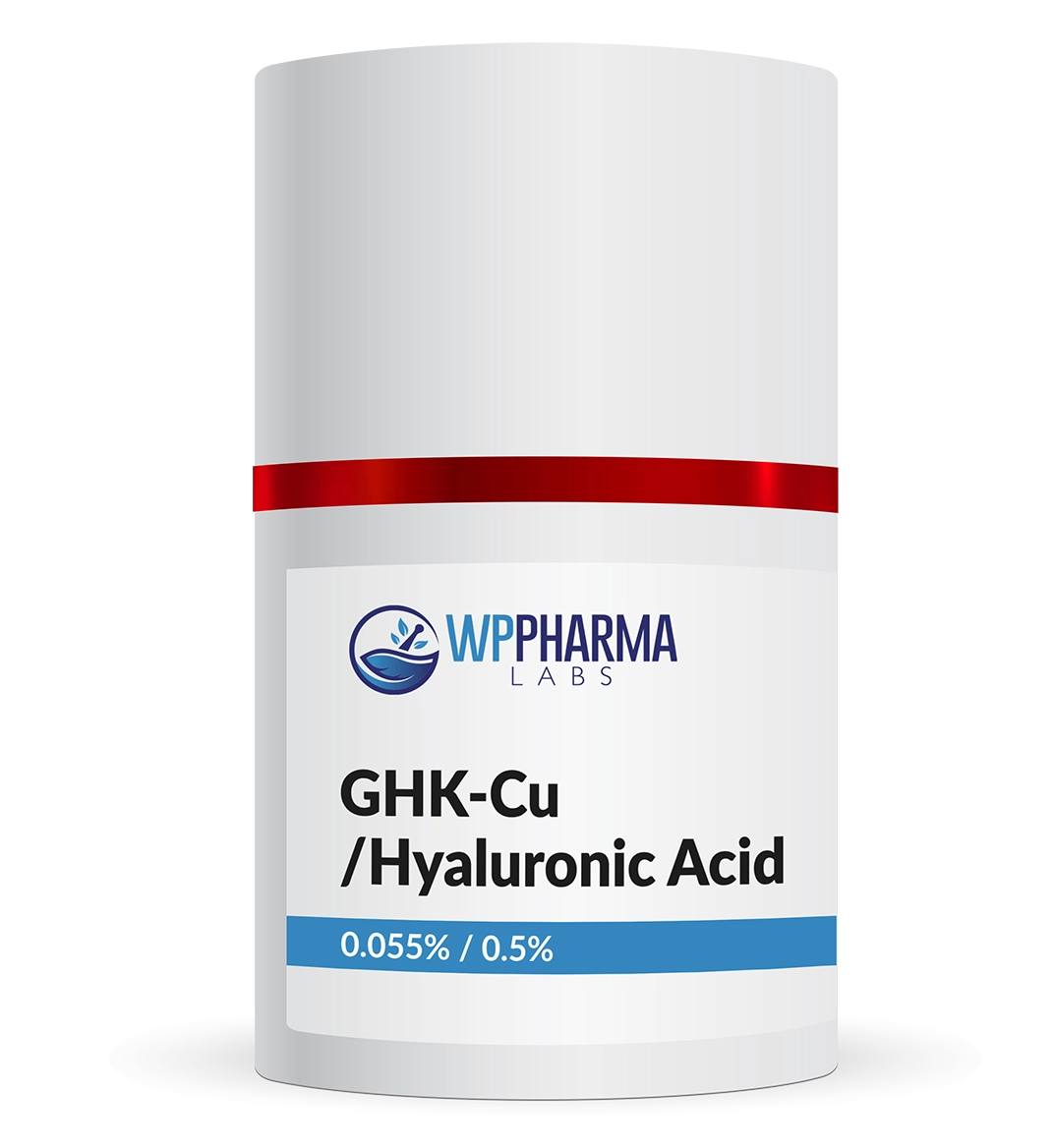
GHK-Cu / Hyaluronic Acid

(Clinical Strength) Gel

0.055% / 0.5%

Ready to prescribe?
Disclaimer: Images are for reference only; actual products may vary.

Product Overview Coming Soon

Product Overview

GHK-Cu Description1

GHK-Cu is a naturally occurring copper-binding peptide involved in tissue remodeling and repair. It consists of a tripeptide (glycine–histidine–lysine) bound to copper (II). It is endogenously present in human plasma, and its levels decrease with age.

Topical formulations containing GHK-Cu are used for their potential role in supporting skin regeneration, enhancing skin appearance, and supporting scalp health. Some evidence also suggests that the peptide may have an effect on hair follicle growth.

Hyaluronic Acid Description2,3 

Hyaluronic acid is a glycosaminoglycan that plays an important role in the skin. It contributes to hydration, elasticity, and overall skin integrity, and it is also involved in wound healing. With aging, hyaluronic acid production declines, which is associated with drier skin and reduced elasticity.

References

  1. Pickart L, Margolina A. Regenerative and Protective Actions of the GHK-Cu Peptide in the Light of the New Gene Data. Int J Mol Sci. 2018;19(7):1987. doi:10.3390/ijms19071987 https://www.ncbi.nlm.nih.gov/pmc/articles/PMC6073405/
  2. Fallacara A, Baldini E, Manfredini S, Vertuani S. Hyaluronic Acid in the Third Millennium. Polymers (Basel). 2018 Jun 25;10(7):701.
  3. Bravo B, Correia P, Gonçalves Junior JE, Sant’Anna B, Kerob D. Benefits of topical hyaluronic acid for skin quality and signs of skin aging: From literature review to clinical evidence. Dermatol Ther. 2022 Dec;35(12):e15903.

GHK-Cu1

The activity of GHK-Cu is thought to be multifaceted and includes:

  1. Gene Modulation:

GHK-Cu has been associated with the upregulation of genes involved in tissue repair, anti-inflammatory signaling, and antioxidant defense, and the downregulation of genes linked to fibrosis and oxidative stress.

  1. Skin Health Support:

Evidence suggests GHK-Cu may enhance dermal fibroblast function, collagen synthesis, and extracellular matrix remodeling—factors that contribute to skin firmness, elasticity, and texture.

  1. Hair Follicle Environment:

GHK-Cu may modulate the follicular microenvironment through support of cell proliferation and anti-inflammatory effects. Preclinical studies have proposed its influence on hair follicle cycling and dermal papilla cell activity.


Hyaluronic Acid2,3

Hyaluronic acid may have the following two mechanisms for its activity on the skin: 1) as a passive structural molecule and 2) as a signaling molecule (based on its molecular size). Hyaluronic acid has hydgroscopicity and viscoelasticity properties. It is highly anionic that can attract water. This attraction of water provides the ability of the skin to create volume and provide structural support. The signaling mechanism may be facilitated by its anti-inflammatory properties through its effects on cell migration and cell division.

GHK-Cu1

Common

Mild local irritation

  • Sensitivity to other ingredients when combined in multi-agent products
  • Discoloration or staining

Hyaluronic Acid4

Common

  • Irritation, redness, and itchiness.

Contraindications1-4

  • Hypersensitivity to GHK, copper peptides, hyaluronic acid or excipients
  • Active local infection, open wounds, or compromised skin barrier at site of application

Precautions1-4

  • Avoid contact with mucous membranes and eyes

Store at 2°C–8°C (36°F–46°F). Protect from light, heat, and moisture.

  1. Pickart L, Margolina A. Regenerative and Protective Actions of the GHK-Cu Peptide in the Light of the New Gene Data. Int J Mol Sci. 2018;19(7):1987. doi:10.3390/ijms19071987 https://www.ncbi.nlm.nih.gov/pmc/articles/PMC6073405/
  2. Fallacara A, Baldini E, Manfredini S, Vertuani S. Hyaluronic Acid in the Third Millennium. Polymers (Basel). 2018 Jun 25;10(7):701.
  3. Bravo B, Correia P, Gonçalves Junior JE, Sant’Anna B, Kerob D. Benefits of topical hyaluronic acid for skin quality and signs of skin aging: From literature review to clinical evidence. Dermatol Ther. 2022 Dec;35(12):e15903.
  4. Modglin L, Cho J. Hyaluronic Acid: Benefits, Uses And More – Forbes Health. January 4, 2024. https://www.forbes.com/health/supplements/hyaluronic-acid/ Accessed August 25, 2025.
This information is for educational purposes only.
This compounded product has not been reviewed, approved, or evaluated by the Food and Drug Administration for safety and effectiveness. This product is not intended to diagnose, treat, cure, or prevent any disease. No claims are made regarding treatment, cure, or prevention of any disease or condition.
This information is a summary. It may not cover all possible drug information about this product. For complete product information, refer to the manufacturer’s prescribing information and labeling. Call your doctor for medical advice and/or about side effects. You may report side effects to the FDA at 1-800-FDA-1088. A WP Pharma Labs pharmacist will be happy to answer any questions. For consultation, please call 1-800-441-0048.

EXPLORE MORE

Related Medications

Licensed to ship across the U.S.

Your orders arrive promptly and privately, delivered directly to your door.

Providers: Let’s Partner for Better Patient Care

If you are a physician, clinic, or practice seeking a dependable Compounding Pharmacy partner, WP Pharma Labs is here to help. With dedicated account setup, streamlined ordering and responsive service, we support your therapeutic goals with specialized compounds designed for your patients.

To check product availability, check on the status of an existing order, request refills:
orders@wppharmalabs.com

New providers setup / update an existing account:
newaccounts@wppharmalabs.com