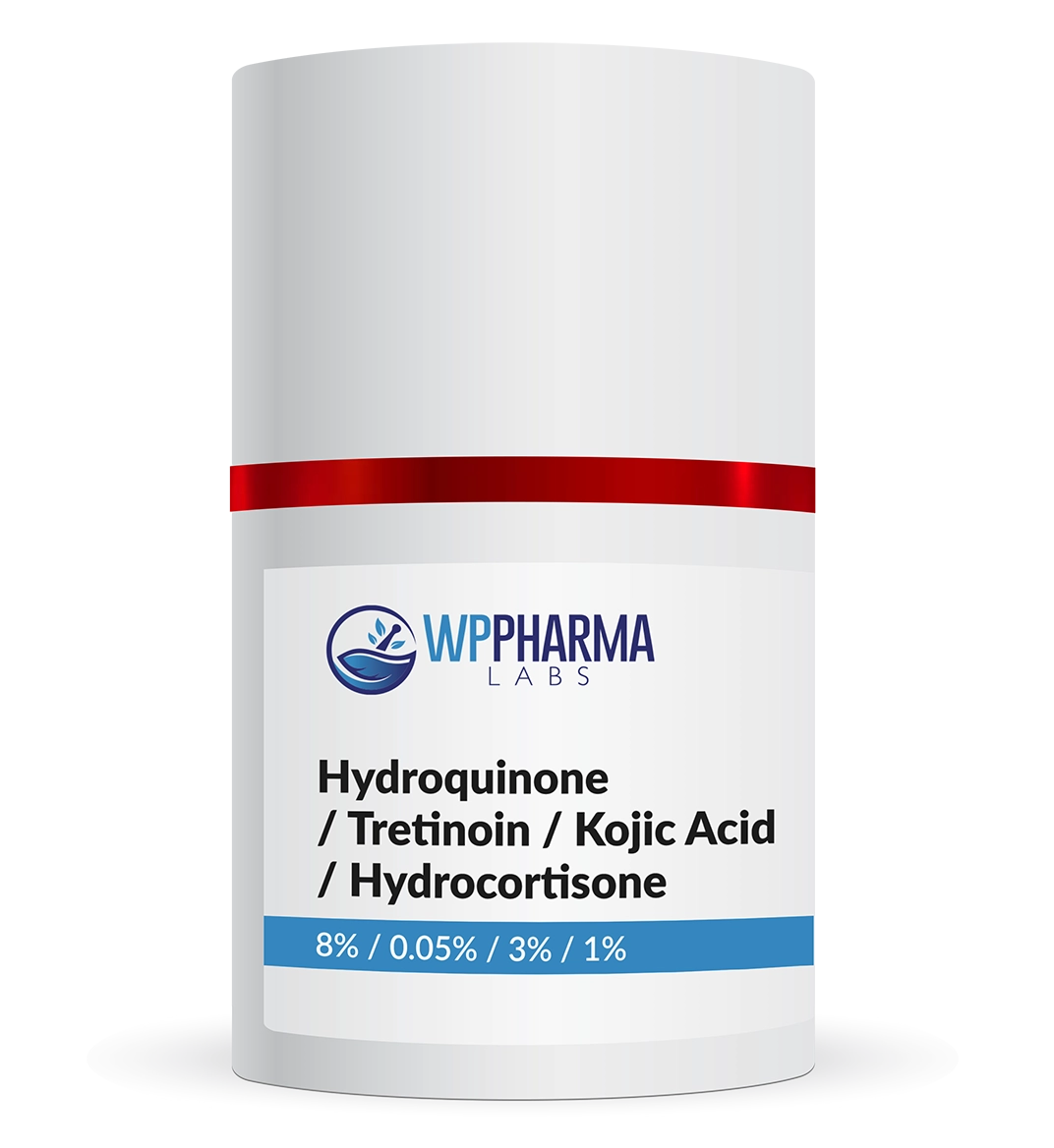
(Derma-Fade Lightening) Topical Cream
8% / 0.05% / 3% / 1%
Product Overview
Hydroquinone / Tretinoin / Hydrocortisone / Kojic Acid / Arbutin – Topical Cream Description1,2
Skin lightening therapy is used to address skin conditions that emanate from hyperpigmentation. Melanin, the pigment responsible for skin darkening, is produced in melanocytes from tyrosine through the action of the enzyme tyrosinase. After it is formed, melanin is transferred to keratinocytes, the main cells of the epidermis. Pigmentation develops when melanin is produced in excess or distributed unevenly. Chemical agents may be used to reduce hyperpigmentation that results from excess melanin production or abnormal distribution.
This topical cream blends ingredients to help lighten hyperpigmentation, promote cell turnover, and may reduce inflammation. The powerful ingredients work together, and may help fade dark spots, even out skin tone, and soothe irritated skin for a clearer, more youthful complexion.
Hydroquinone3-6
Hydroquinone is a phenolic organic compound with the molecular formula C₆H₆O₂. It has been used in both the photography and cosmetic industries and is commonly compounded in concentrations ranging from 2% to 12%. The effectiveness and potential toxicity of hydroquinone depend on its final concentration, the formulation vehicle, and the chemical stability of the product. The skin-lightening effects of hydroquinone may take up to two months to become noticeable.
Tretinoin7,8
Tretinoin is a naturally occurring vitamin A derivative, also known as all-trans-retinoic acid. Retinoids may help regulate cell reproduction, proliferation, and differentiation. In hyperpigmentation conditions, tretinoin can inhibit the transcription of the enzyme tyrosinase, thereby reducing melanogenesis.
Hydrocortisone9,10
Hydrocortisone is a steroid hormone with both glucocorticoid and mineralocorticoid activity and is the synthetic form of cortisol, a hormone produced by the adrenal glands. When applied topically, hydrocortisone has anti-inflammatory, antipruritic, anti-mitotic, and immunosuppressive effects. Among the many topical steroids available, hydrocortisone is considered low potency. It is often included in hyperpigmentation treatments because it may help reduce irritation caused by other ingredients.
Kojic Acid11,12
Kojic acid is an organic acid derived from several types of fungi, including A. flavus, A. oryzae, A. tamarii, and A. parasiticus. First isolated in 1907 and marketed in 1955, it is commonly used as a depigmenting agent. In addition to its skin-lightening role, it is thought to have antioxidant, antibacterial, and anti-inflammatory properties.
Arbutin13
Arbutin is a skin-lightening compound made of D-glucose bound to hydroquinone. It can be obtained from plant sources, produced from hydroquinone, or created through chemical synthesis. Arbutin is frequently used in combination with other skin-lightening agents.

Hydroquinone3-6
Hydroquinone affects the melanogenesis process by inhibiting tyrosinase. It also inhibits DNA and RNA synthesis and suppresses the formation of melanosomes. The ability of hydroquinone to affect the melanocyte metabolic process may lead to a decrease in the production of melanin.
Tretinoin7,8
Tretinoin prevents the transcription of the enzyme tyrosinase which minimizes melanogenesis. In addition, tretinoin decreases melanin transfer, increases cell turnover of keratinocytes and the permeability in the stratum corneum. In this way melanin is dispersed.
In addition to its other activity, tretinoin may prevent hydroquinone oxidation and improve epidermal penetration of hydroquinone.
Hydrocortisone9,10
The anti-inflammatory effects of topical hydrocortisone may occur through vasoconstriction. The vasoconstriction minimizes inflammatory mediators delivered to the inflamed area. Topical hydrocortisone may also inhibit the release of phospholipase A2, which reduces prostaglandins and leukotriene. Lastly, topical hydrocortisone inhibits DNA and transcription factors related to inflammation. It does this by increasing the expression of anti-inflammatory genes and indirectly inhibiting inflammatory transcription factors, such as NF-kB, to decrease the expression of pro-inflammatory genes.
Topical hydrocortisone may also have an anti-mitotic effect by decreasing epidermal mitosis mediated through an increase in lipocortin, an endogenous glucocorticoid-regulated protein.
Topical hydrocortisone may also inhibit humoral factors in the inflammatory response by suppressing immune cells from maturing, differentiating and proliferating.
It may also decrease irritation from hydroquinone and tretinoin.
Kojic Acid11,12
Kojic acid is thought to chelate copper. Copper is needed at the active site of the tyrosinase enzyme. This action inhibits the activity of the tyrosinase enzyme. The tyrosinase enzyme is needed for melanin production.
Arbutin13
Arbutin may decompose to hydroquinone as a byproduct either when compounded into a cosmetic product or when applied to the skin. The mechanism of how hydroquinone is yielded from arbutin when applied to the skin may occur due to exposure to skin microorganisms or ultraviolet radiation. Mechanistically, hydroquinone inhibits the enzyme tyrosinase and destroys melanosomes. It may also cause necrosis of melanocytes through its action on the membrane structure.
Common3-15
Serious3-15
Contraindications3-15
Precautions3-15
Store at 20–25°C (68–77°F) in a cool, dry place, protected from light and moisture. Keep container tightly closed.
WPPL operates as a 503A compounding pharmacy and prepares individualized prescription medications pursuant to provider direction. Compounded preparations are not reviewed, tested, or approved by the FDA.
This listing also includes commercially manufactured products for convenience; these items are not compounded by our pharmacy and are sold as provided by their manufacturers. Any statements regarding non-compounded products are manufacturer-supplied, have not been evaluated by the FDA, and are not intended to diagnose, treat, cure, or prevent any disease. WPPL does not verify or endorse any therapeutic claims made by manufacturers. Please refer to original labeling for complete product information.
EXPLORE MORE
Related Medications
Licensed to ship across the U.S.
Your orders arrive promptly and privately, delivered directly to your door.
Providers: Let’s Partner for Better Patient Care
If you are a physician, clinic, or practice seeking a dependable Compounding Pharmacy partner, WP Pharma Labs is here to help. With dedicated account setup, streamlined ordering and responsive service, we support your therapeutic goals with specialized compounds designed for your patients.
To check product availability, check on the status of an existing order, request refills:
orders@wppharmalabs.com
New providers setup / update an existing account:
newaccounts@wppharmalabs.com