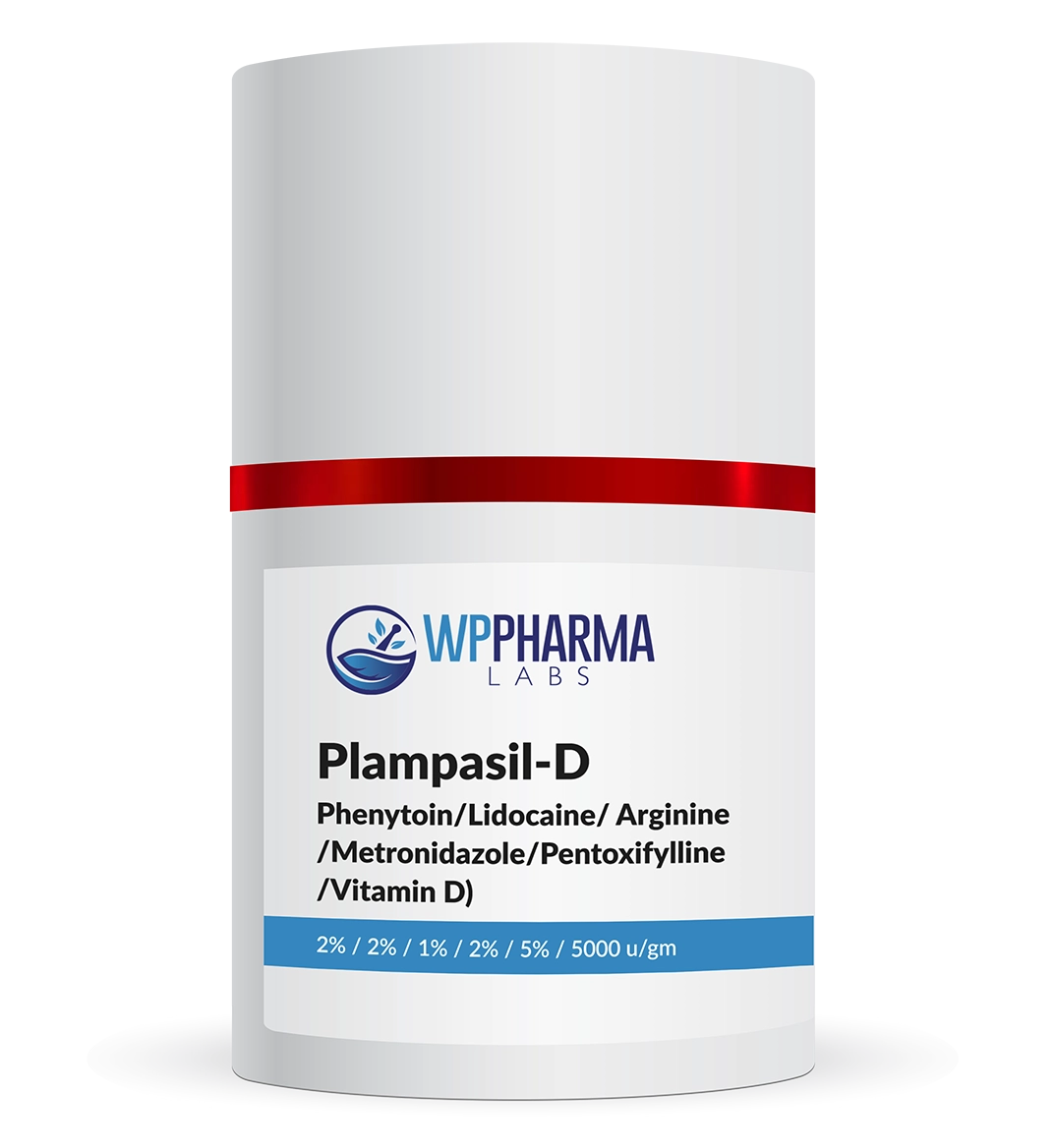
(Plampasil-D) Wound Gel
2% / 2% / 1% / 2% / 5% / 5,000 u/gm
Product Overview Coming Soon
Product Overview
This gel combines multiple ingredients that may promote wound healing, decrease pain, and prevent infection. The formulation is intended to support tissue repair processes and circulation in both chronic and acute wounds.
Phenytoin1-4
Phenytoin has been used as an antiepileptic medication since 1937. During its clinical use, gingival hyperplasia was identified as an adverse effect, which led to interest in its interaction with tissue growth processes. Phenytoin has been evaluated in settings involving diabetic ulcers, pressure ulcers, venous stasis ulcers, and traumatic wounds.
Lidocaine5-7
Lidocaine is an amide-type local anesthetic. It is commonly used for topical application in conditions involving localized discomfort and sensory nerve activity, including musculoskeletal and neuropathic contexts.
Arginine8-10
Arginine is a semi-essential amino acid involved in multiple metabolic pathways. It participates in nitric oxide synthesis and is associated with vascular, immune, and collagen-related processes within the body, including those present at wound sites.
Metronidazole11-13
Metronidazole is an antibacterial agent with activity against anaerobic microorganisms. Anaerobic bacteria are frequently present in wound environments. Metronidazole has also demonstrated activity against certain gram-positive and gram-negative aerobic organisms and has been used in topical wound-care settings.
Pentoxifylline14-16
Pentoxifylline is a methylxanthine derivative that has been studied for its effects on blood flow characteristics and inflammatory pathways. It is associated with changes in red blood cell flexibility and tissue perfusion.
Vitamin D17-20
Vitamin D is a fat-soluble vitamin identified in the early 20th century and is available primarily as vitamin D₂ (ergocalciferol) and vitamin D₃ (cholecalciferol). It plays a role in calcium and phosphorus regulation, bone metabolism, and immune system processes. Vitamin D is obtained through sunlight exposure, dietary intake, and supplementation and requires metabolic activation to exert biological activity. In dermatologic research, it has been examined for its cellular and immunologic roles in the skin.
References
Phenytoin1-4
Phenytoin has several potential ways it may help heal wounds. It may increase the expression of platelet-derived growth factor B in macrophages. It may also stimulate an increase in fibroblast activity to provide formation of granulation tissue and facilitate collagen formation. competitive glucocorticoid antagonism, pain alleviation by membrane-stabilizing action, and antibacterial activity.
Lidocaine5-7
Lidocaine stabilizes nerves by preventing ion increases that are needed for the initiation and propagation of electrical impulses. It decreases pain by nerve conduction blockade by diminishing nerve membrane permeability to sodium. This activity inhibits membrane depolarization and affects ability of the nerve to stimulate electrical activity.
Arginine8-10
Arginine is a precursor to the formation of nitric oxide. Nitric oxide helps vasodilate blood vessels to facilitate blood flow, oxygen and nutrients to the site of the wound. This activity may facilitate improved wound healing. It may also stimulate collagen formation, increase growth hormone and insulin-like growth factor, and support T cell activity to help prevent infection at the site of a wound.
Metronidazole11-13
Metronidazole has an attraction for anerobic bacteria where it is transported intracellularly to interact with DNA leading to inhibition of DNA synthesis and DNA degradation.
Pentoxifylline14-16
Pentoxifylline may facilitate through its vasodilator activities increased flow of blood to improve oxygen delivery. It may also have anti-inflammatory activity by decreasing synthesis of inflammatory mediators including decreasing cytokine release and decreasing white blood cell activity. It may also decrease oxygen-free radical production to reduce oxidative stress.
Vitamin D17-20
Vitamin D may regulate keratinocytes to stimulate epithelialization to facilitate wound healing. It also may may aid in healing of wounds by decreasing inflammation in the skin through a decrease in pro-inflammatory mediators such as IL-6 and TNF-a. It also promotes angiogenesis through factors such as vascular endothelial growth factor (VEGF) and platelet derived growth factor (PDGF) which help with nutrient and oxygen delivery to the site of the wound.
Common1
Contraindications 1,2
Precautions1,2
Store at 20°C to 25°C (68°F to 77°F). Protect from light, moisture, and heat.
EXPLORE MORE
Related Medications
Licensed to ship across the U.S.
Your orders arrive promptly and privately, delivered directly to your door.
Providers: Let’s Partner for Better Patient Care
If you are a physician, clinic, or practice seeking a dependable Compounding Pharmacy partner, WP Pharma Labs is here to help. With dedicated account setup, streamlined ordering and responsive service, we support your therapeutic goals with specialized compounds designed for your patients.
To check product availability, check on the status of an existing order, request refills:
orders@wppharmalabs.com
New providers setup / update an existing account:
newaccounts@wppharmalabs.com