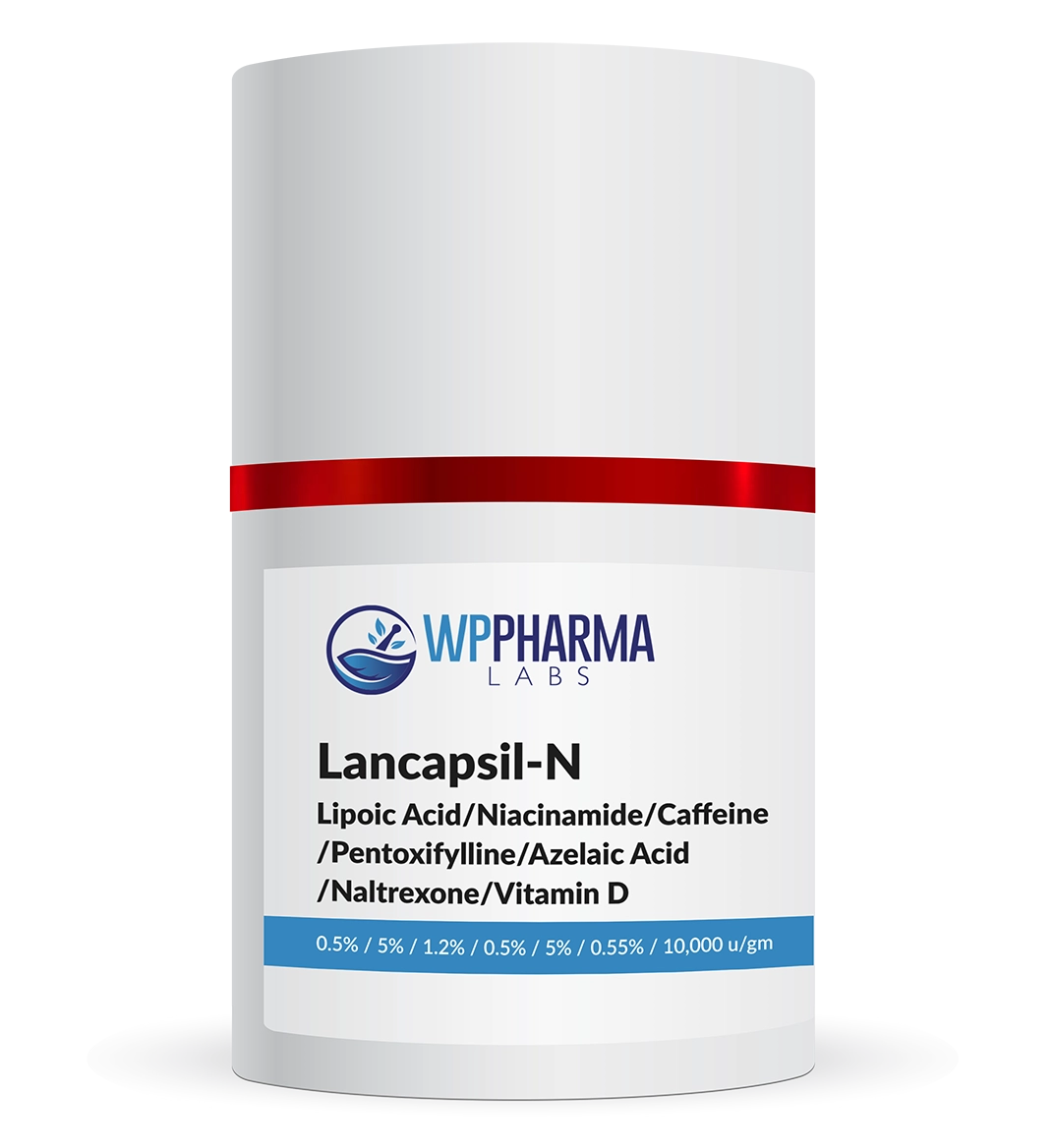
(Lancapsil-N) Scar Gel
0.5% / 5% / 1.2% / 0.5% / 5% / 0.55% / 10,000 u/gm
Product Overview Coming Soon
Product Overview
This scar gel contains a combination of ingredients that have been included in topical formulations used in scar-related skin care contexts. The formulation brings together components that have been examined in dermatologic literature in relation to skin turnover, pigmentation pathways, and inflammatory processes.
Lipoic Acid1-3
Lipoic acid, also called alpha lipoic acid, may act as an antioxidant and anti-inflammatory agent for the skin. It is believed to help lessen the effects of skin aging or previously damaged skin.
Niacinamide4,5
Niacinamide is a water-soluble form of vitamin B3 that plays an essential role in cellular metabolism. Niacin and niacinamide are both vitamin B3 derivatives with minor structural differences. It has been shown to support the skin barrier and to function as an anti-inflammatory, antioxidant, and skin-brightening agent. When applied topically, niacinamide has been shown to be beneficial for acne vulgaris, melasma, psoriasis, and aging skin.
Caffeine6,7
Caffeine is a xanthine compound that acts as an adenosine-receptor antagonist. It may exhibit antioxidant and anti-inflammatory properties, as well as vasodilatory effects that increase blood flow to wound sites. Caffeine may also help inhibit skin fibrosis and scar formation.
Pentoxifylline8,9
Pentoxifylline may exert anti-inflammatory effects and suppress fibroblast activity. Due to its ability to inhibit fibroblast activity, it may help reduce or prevent the formation of scars and keloids.
Azelaic Acid10
Azelaic acid may have antibacterial, anti-inflammatory, and antioxidant properties. It has been used in dermatology for conditions including rosacea, acne vulgaris, melasma, and the prevention of scar formation.
Naltrexone11-13
Naltrexone is an opioid receptor antagonist that may have anti-inflammatory effects and, at low doses, may be beneficial for certain dermatological indications.
Vitamin D14-16
Vitamin D is a fat-soluble vitamin discovered in the early 1920s and exists primarily as two forms: D2 (ergocalciferol) and D3 (cholecalciferol). It is an essential vitamin that supports bone health, immune function, and the regulation of calcium and phosphorus levels. Vitamin D is inactive in the body and can be obtained through sun exposure, diet, and supplements, requiring activation to exert physiological effects. It may provide immunomodulatory, anti-inflammatory, and antioxidant activity for the skin.kin.
References
Lipoic Acid1-3
Lipoic acid, as an antioxidant for dermatological properties, may act as a free radical scavenger. It also decreases the deposition of collagen in the skin and may lower glycosaminoglycans which are secreted by fibroblasts. In addition, lipoic acid may decrease pro-inflammatory cytokines and transforming growth factor β1. This activity may work to decrease or minimize scar formation on the skin.
Niacinamide4,5
Niacinamide may inhibit melanosome transfer, increase ceramide synthesis and act as an anti-inflammatory. Specifically, niacinamide is thought to inhibit proteins (sirtuins and poly-(ADP-ribose) polymerases) in the skin and reduce reactive oxygen species to decrease inflammation. Niacinamide may decrease underlying inflammation to decrease hyperpigmentation and hypertrophic changes in a scar.
Caffeine6,7
Caffeine may reduce collagen synthesis and overall fibroblast activity. It also decreases the activity of keratinocytes and interferes with transforming growth factor beta activation.
Pentoxifylline8,9
Pentoxifylline may decrease collagen, fibronectin, and glycosaminoglycan production leading to decreased fibroblast activity in the skin.
Azelaic Acid10
Azelaic acid may decreases the transcription of cytokines and chemokines to decrease blood flow and inflammation in a scar. It also may prevent the generation of reactive oxygen species and decrease oxidative damage.
Naltrexone11-13
Naltrexone may have immunomodulatory activity by decreasing Toll-like receptors signaling, minimizing release of proinflammatory cytokines (tumor necrosis factor, interleukin-6, interleukin- 12), inhibiting T lymphocyte proliferation, and down-regulating the expression of chemokine receptors in the skin. These activities may decrease inflammation and prevent scar formation.
Vitamin D14-16
Vitamin D decreases inflammation in the skin through the inhibition of the production of collagen by inhibiting the formation of fibroblast cells and development of fibrous tissue. It decreases the production of extracellular matrix triggered by TGF-β to facilitate anti-inflammatory activity.
Common1
Contraindications1,2
Precautions1,2
Store at 20°C to 25°C (68°F to 77°F). Protect from light, moisture, and heat.
EXPLORE MORE
Related Medications
Licensed to ship across the U.S.
Your orders arrive promptly and privately, delivered directly to your door.
Providers: Let’s Partner for Better Patient Care
If you are a physician, clinic, or practice seeking a dependable Compounding Pharmacy partner, WP Pharma Labs is here to help. With dedicated account setup, streamlined ordering and responsive service, we support your therapeutic goals with specialized compounds designed for your patients.
To check product availability, check on the status of an existing order, request refills:
orders@wppharmalabs.com
New providers setup / update an existing account:
newaccounts@wppharmalabs.com