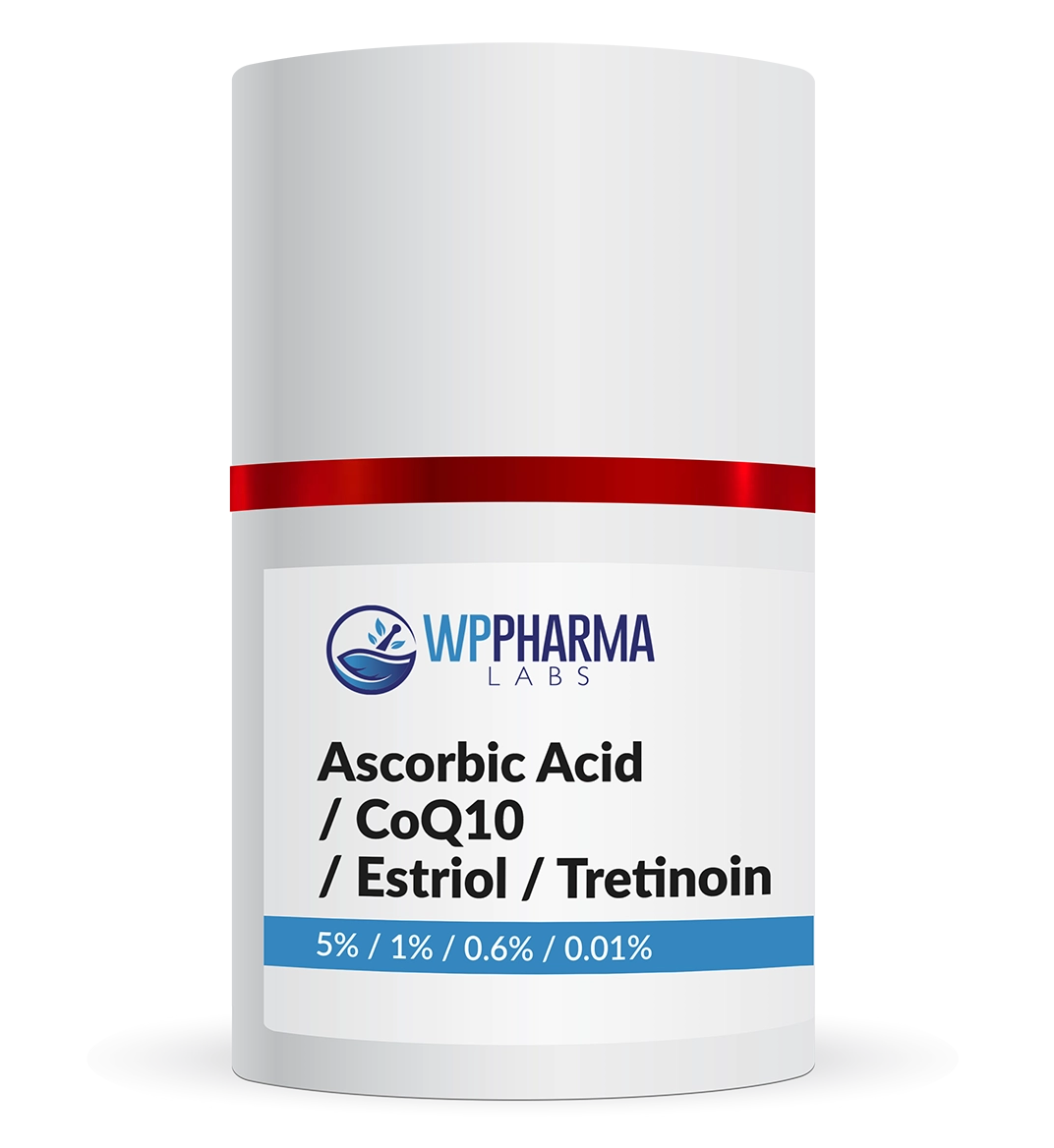
Facial Cream
5% / 1% / 0.6% / 0.01%
Product Overview
Ascorbic Acid / CoQ10 / Estriol / Tretinoin Cream is a compounded topical formulation intended to address visible signs of skin aging, including fine lines and dullness, while supporting improved skin tone and elasticity. It is also used to target concerns related to photoaging and pigmentation.
Ascorbic Acid1-5
Ascorbic acid, also known as vitamin C, is a water-soluble vitamin with antioxidant properties and serves as an essential cofactor in collagen synthesis, carnitine and catecholamine metabolism, and dietary iron absorption. It is an important component in maintaining healthy skin integrity. In addition to its antioxidant effects on the skin, ascorbic acid exhibits anti-inflammatory activity, functions as a depigmenting agent, and supports collagen formation. Deficiency of ascorbic acid is associated with skin aging; therefore, topical supplementation is considered one approach used in skin anti-aging strategies.
Ascorbic acid is not synthesized by the body and must be obtained through diet or supplementation. Dietary sources include citrus fruits, berries, tomatoes, potatoes, and green leafy vegetables.
Coenzyme Q10 (CoQ10)6-8
Coenzyme Q10 (CoQ10) is a lipophilic compound naturally present in the body and plays a primary role in cellular energy metabolism through the mitochondrial electron transport chain. It also acts as an antioxidant by reducing free radicals. This antioxidant activity and involvement in mitochondrial function may help decrease visible signs of skin aging and support the regeneration of skin elasticity. CoQ10 levels decline with age, resulting in reduced protection against reactive oxygen species.
The combination of tretinoin and CoQ10 supports skin turnover and enhances antioxidant protection, contributing to improved skin integrity.
Estriol9-13
Micronized estriol is a bioidentical form of estriol (E3), one of the three naturally occurring estrogens in women, along with estradiol and estrone. Estriol is considered the least potent estrogen, with significantly lower receptor binding affinity and a shorter duration of action compared to estradiol (E2). Despite its lower potency, estriol has demonstrated potential skin-related properties, including support for dermal thickness and elasticity. Estriol is most often used in combination with estradiol in postmenopausal women with estrogen deficiency and is commonly compounded in a transdermal cream, which allows for gradual dose adjustments.
Tretinoin14,15
Tretinoin is a naturally occurring derivative of vitamin A, also known as all-trans-retinoic acid. Retinoids may support the regulation of cell reproduction, proliferation, and differentiation. Tretinoin is believed to promote skin cell turnover, which may help improve skin texture and tone. It is used in the treatment of acne vulgaris and for photoaging concerns, including facial wrinkles, skin roughness, and hyperpigmentation. In hyperpigmentation disorders, tretinoin may inhibit transcription of the enzyme tyrosinase, thereby reducing melanogenesis.
Ascorbic Acid1-5
Ascorbic acid functions in the aqueous compartments of the cell. As an antioxidant, ascorbic acid neutralizes free radicals by donating electrons to prevent oxidative stress. Reactive oxygen species are formed when skin is exposed to ultraviolet light forming superoxide ions, peroxide and singlet oxygen species. Ascorbic acid facilitates collagen development. It plays an important role in the maturation of collagen. It is a critical co-factor for prolyl hydroxylase and lysl hydroxylase. The level of ascorbic acid in the skin is directly tied to the structural integrity of dermal collagen. As a depigmenting agent, ascorbic acid interacts with copper ions at the tyrosinase‑active site and inhibits action of the enzyme tyrosinase, thereby minimizing the melanin formation. Ascorbic acid interferes with NFkB activity and thus decreases the activity of a number of pro‑inflammatory cytokines such as TNF‑alfa, IL1, IL6 and IL8.
CoenzymeQ106-8
CoenzymeQ10 has a critical role as a cofactor for mitochondrial enzyme pathways within cells. Impairments in mitochondrial function disrupt cellular adenosine triphosphate (ATP) production and thereby inhibit the fuel for cellular repair mechanisms and function. Reactive oxygen species accumulate, which in turn can damage mitochondria, cellular membranes, and mitochondrial DNA, accelerating skin aging in a negative feedback loop. Coenzyme Q helps to facilitate mitochondrial activity and maintain energy. CoQ10 inhibits the ability of free radicals to activate mitogen activated protein kinase pathway and the ability of collagenases to form minimizing damage to collagen. It also decreases damage caused by lipid peroxidases to li[pids, proteins and DNA.
Estriol9-13
Estriol acts by binding to estrogen receptors alpha (ERα) and beta (ERβ) in estrogen-responsive tissues, particularly the vaginal epithelium, bladder, urethra, and pelvic floor musculature.
Mechanisms and Effects:
Tretinoin14,15
Tretinoin binds to retinoic acid receptors (RARs) alpha, beta, and gamma along with retinoid X receptors (RXRs) to block inflammatory mediators. In addition, during the binding to the retinoid acid receptor, the production of procollagen increases to augment collagen type I and III formations.
Common1-15
Contraindications1-15
Precautions1-15
Use caution in:
Store at 20°C to 25°C (68°F to 77°F) in a dry place, away from heat and light. Keep out of reach of children.
WPPL operates as a 503A compounding pharmacy and prepares individualized prescription medications pursuant to provider direction. Compounded preparations are not reviewed, tested, or approved by the FDA.
This listing also includes commercially manufactured products for convenience; these items are not compounded by our pharmacy and are sold as provided by their manufacturers. Actual products in stock at time of dispensing may vary due to supply chain variability. Any statements regarding non-compounded products are manufacturer-supplied, have not been evaluated by the FDA, and are not intended to diagnose, treat, cure, or prevent any disease. WPPL does not verify or endorse any therapeutic claims made by manufacturers. Please refer to original labeling for complete product information.
EXPLORE MORE
Related Medications
Licensed to ship across the U.S.
Your orders arrive promptly and privately, delivered directly to your door.
Providers: Let’s Partner for Better Patient Care
If you are a physician, clinic, or practice seeking a dependable Compounding Pharmacy partner, WP Pharma Labs is here to help. With dedicated account setup, streamlined ordering and responsive service, we support your therapeutic goals with specialized compounds designed for your patients.
To check product availability, check on the status of an existing order, request refills:
orders@wppharmalabs.com
New providers setup / update an existing account:
newaccounts@wppharmalabs.com